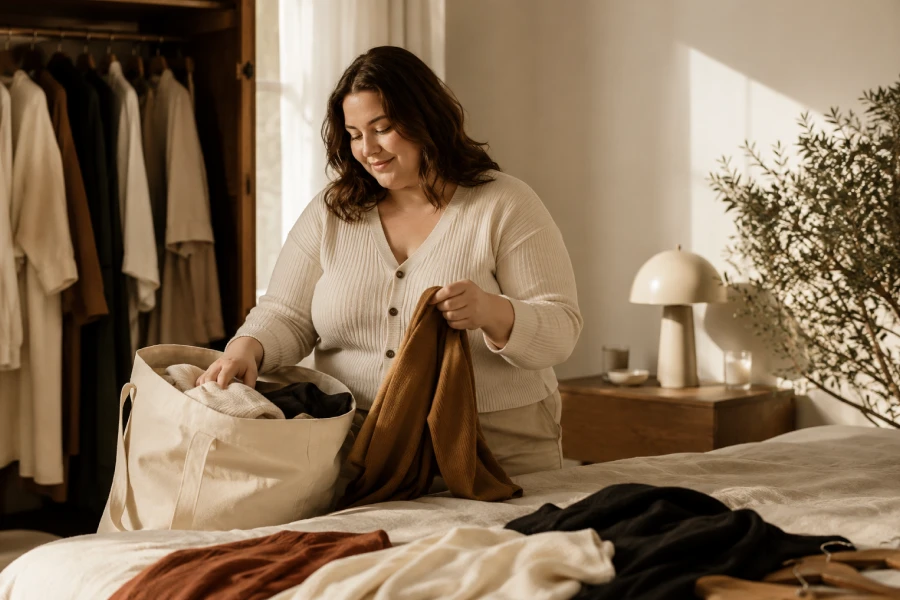
What to keep or donate from wardrobe can feel surprisingly personal when memories enter the decision. A dress may represent a former job, a hopeful future, or a version of yourself. That history deserves acknowledgment, but it should not control every hanger. Your closet exists to serve the life you live now. Start by separating sentiment from practical use. You can appreciate an item without requiring it to take daily space. A thoughtful process makes room for both gratitude and change. It also prevents a simple wardrobe edit from becoming emotionally exhausting. The most helpful question is not whether an item is good. Ask whether it is useful to you today.
Real life should become the standard for every decision. Look at your typical week before you examine individual garments. Notice your work demands, weather, social plans, and preferred level of comfort. A keep or donate decisions framework becomes easier when it reflects those practical patterns. Keep clothes that support recurring parts of your life. Question pieces reserved only for an imaginary occasion. Consider whether you would choose the item over similar alternatives. If the answer remains no, release may be more useful than storage. Honest context helps the closet become a realistic resource. It also protects you from holding onto every possibility.
Some clothes need a simple repair before returning to regular use. Others have sat unfinished for years without a plan. The difference matters because unfinished projects can quietly become clutter. Set aside a small repair basket with a strict deadline. Mend, tailor, or clean those pieces within a specific month. Then decide whether they still deserve a place. A closet organization routine should include this follow-through rather than treating damage as a permanent exception. Be realistic about cost and effort. A small alteration may restore a favorite item beautifully. Endless postponement usually signals that the piece has lost relevance. Clear deadlines turn good intentions into decisions.
Pressure creates rushed choices that often lead to regret. Instead, make a temporary holding area for uncertain items. Wear them during a normal week when you can test comfort and versatility. Notice whether you reach for them without forcing the idea. Pay attention to fabric, fit, and how you feel after several hours. This quiet experiment tells you more than a dramatic purge. You may rediscover useful pieces that only needed better styling. You may also confirm that some items no longer belong. Either result is valuable because it comes from experience. A slower method creates a more dependable final wardrobe.
Donation feels easier when it becomes part of a responsible routine. Wash or repair clothing when that effort is reasonable. Sort items by condition before deciding where they can do the most good. Pieces that remain wearable can serve someone else immediately. A donation-ready wardrobe keeps reusable items from lingering in bags for months. Schedule the drop-off before you start the edit. That small step prevents hesitation from rebuilding the pile. Recycle items that are too worn for another owner. Let the exit process feel complete and respectful. Then notice how much lighter the remaining closet feels.
Your decisions reveal useful information about your personal style. Perhaps you keep relaxed tailoring but release bodycon dresses. Maybe bright colors stay while gray basics always remain unworn. These patterns are not failures or rules. They are evidence about what helps you feel most like yourself. Treat the edit as a personal style audit rather than a test of discipline. Write down what your best pieces have in common. Use that insight when you shop or get dressed later. A wardrobe becomes more coherent when your choices have a clear thread. That thread can evolve without becoming confusing.
Letting go works best when you focus on what remains possible. Extra space makes your favorite clothes easier to find and enjoy. Fewer half-right options reduce the urge to buy more replacements. You also gain a better view of gaps worth addressing later. Keep the final closet flexible enough for ordinary changes in mood. Add slowly when a real need appears. Release items with care, not punishment. The process should make you feel more capable, not less expressive. A wardrobe edit becomes successful when it removes friction from your day. That sense of ease is far more valuable than a perfect number of items.




Leave a comment