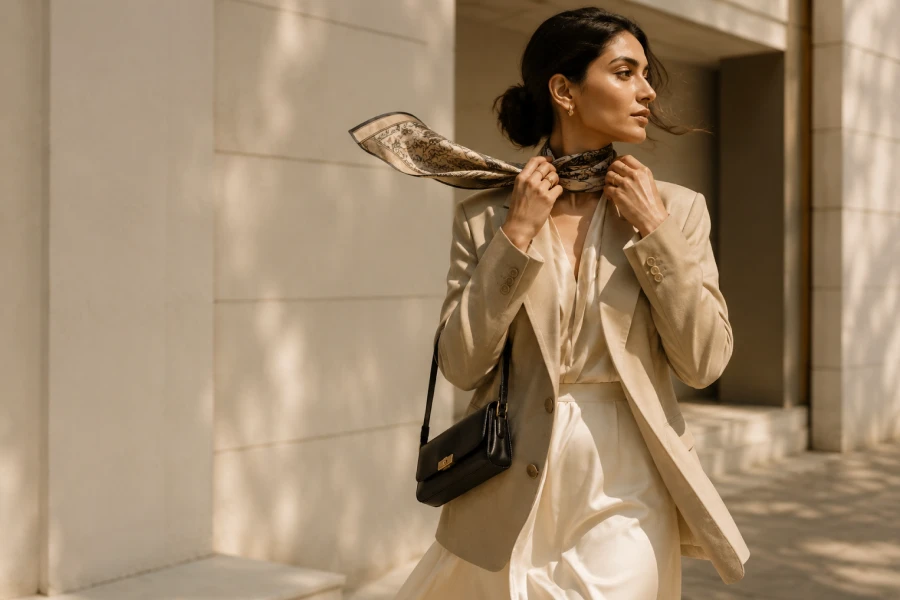
Learning how to wear a scarf is less about memorizing knots than reading an outfit. Every look already has a shape, a level of formality, and a mood. The accessory should support those qualities instead of competing with them. Begin by asking what your clothing seems to need. A plain crewneck may need color near the face. A sharp blazer may need something softer around the neckline. A casual jacket may need a detail with polish. One smart adjustment can make familiar pieces feel newly useful. The result should look relaxed enough to suit real life. That is when styling starts to feel instinctive.
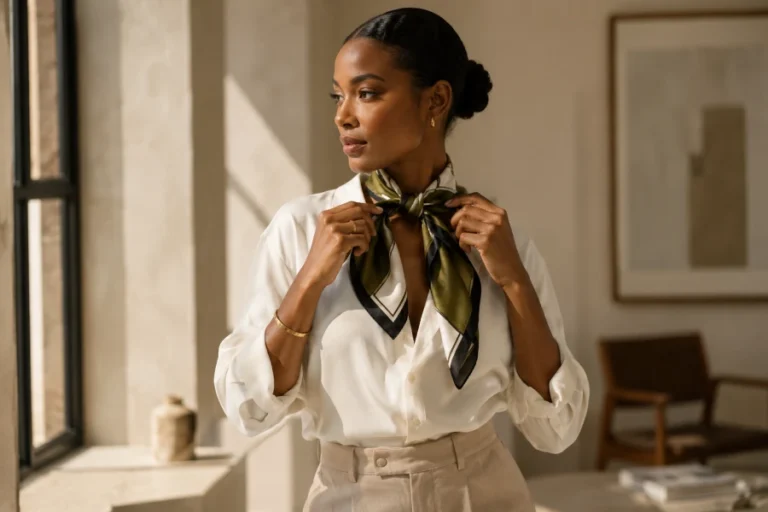
Necklines give you the easiest starting point for choosing a shape. Crewnecks work well with small squares folded into a soft triangle. Open collars leave room for a narrow tie or loose wrap. Turtlenecks usually need a larger piece with visible drape. Think of everyday scarf looks as an adjustment to existing proportions, not a separate costume. Keep the knot low when your neckline already feels busy. Bring it closer to the collar when you need more definition. Try the combination while wearing your usual outer layer. A styling choice that works only indoors is rarely practical. Movement and comfort should always influence the final decision.
An anchor piece gives the rest of your outfit a place to begin. It might be a dark jacket, a pair of loafers, or structured trousers. Once you identify it, choose an accessory that either echoes or softens it. Refined silk scarf outfit ideas often work because silk adds lightness to more grounded pieces. A textured blazer and smooth silk create a useful contrast. Denim and a polished print produce the same effect. Avoid matching every color exactly. Small variations look more natural than a perfectly coordinated set. Let one tone repeat quietly in your clothing. This gives the accessory purpose without making it look planned to excess.
Accessories should sharpen your preferences instead of hiding them. Minimal dressers may prefer clean solids, subtle borders, and simple folds. Pattern lovers can use a scarf to introduce unexpected color combinations. The key is keeping the choice connected to your usual wardrobe. Consider scarf accessories for outfits as punctuation, not a complete rewrite. A single graphic accent can still feel personal beside classic separates. When in doubt, choose a version of something you already wear. Familiar colors make experimentation easier. Repetition builds confidence faster than novelty alone. Your look should still feel like you on an especially good day.
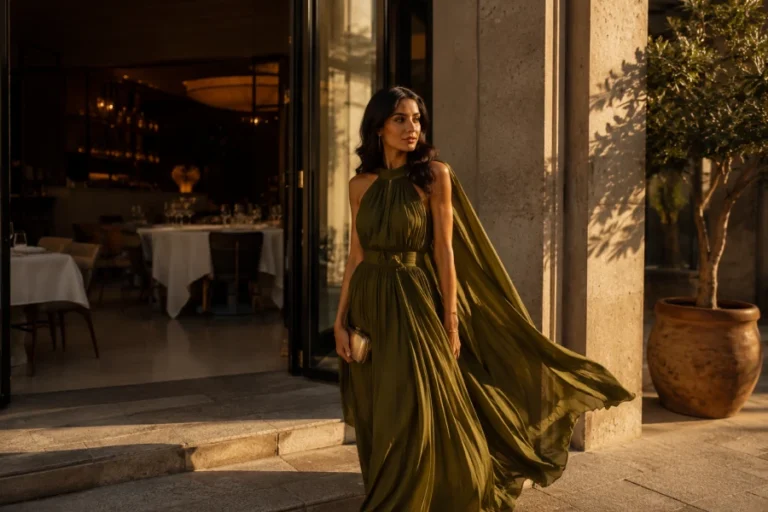
Different plans call for different levels of visual energy. A lunch meeting may suit a quiet stripe or tonal print. Dinner with friends can welcome brighter color and looser drape. An event after work may need something that photographs well. Use seasonal scarf styling to match both weather and atmosphere. Lightweight fabrics feel natural in bright spring light. Rich textures add depth during cooler evenings. Always consider how much of the accessory will remain visible under outerwear. A beautiful knot has little impact when a coat hides it completely. Choose a placement that survives the whole plan. Practicality is part of looking polished.
Day-to-night dressing works when the base outfit remains flexible. Start with clean trousers, a knit, or a simple dress. Then choose an accessory that can shift the mood after sunset. A restrained daytime knot can become looser before dinner. A scarf tied at the neck can move to the hair or handbag. This change gives the same outfit a fresh focal point. Keep a compact piece in your tote when the day includes evening plans. That habit saves time and prevents last-minute shopping. It also helps you make more use of clothes you already own. Small changes often create the most believable transformations.
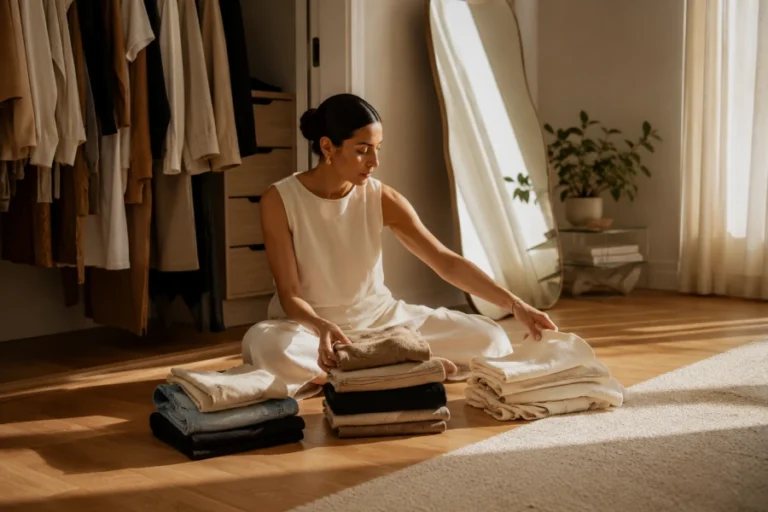
Natural style comes from repetition, not constant reinvention. Practice a few reliable folds until they take seconds to complete. Keep accessories where you can see their color and texture. Pair them with outfits that already work before trying ambitious combinations. Notice which styles remain comfortable through travel, meetings, and meals. Those pieces deserve a permanent place in your rotation. Let compliments confirm what you already enjoy rather than dictate every choice. A good accessory habit should simplify your wardrobe decisions. It should never create anxiety before leaving home. Once that balance clicks, the finishing move becomes second nature.

Leave a comment